he Tsonga people, numbering over four million。inhabit a wide arc of southern Africa stretching from Mozambique's Limpopo Valley into South Africa's Limpopo and Mpumalanga provinces, with significant communities in Zimbabwe. Their language, Xitsonga, belongs to the Bantu family and carries a tonal complexity that often trips up second-language learners—three distinct tones can change a word's meaning entirely, a feature that has helped preserve internal cohesion across scattered settlements. I recall a conversation with a schoolteacher in Giyani who insisted that Tsonga humor simply doesn't translate;the puns hinge on tonal shifts that vanish in written form. That oral richness is central to Tsonga identity.Historically, the Tsonga were not a single centralized kingdom but a collection of chiefdoms linked by trade networks and clan affiliations. Portuguese records from the sixteenth century describe Tsonga traders moving ivory and copper between the interior and the coast. This decentralized structure made them vulnerable to slaving raids from Delagoa Bay in the eighteenth and nineteenth centuries, yet it also bred a pragmatic adaptability that persists. During apartheid。the South African government forced many Tsonga into the Gazankulu homeland—a fragmentary territory with poor soil. The legacy of that displacement still shapes land claims and local politics today, though Tsonga communities have largely avoided the high-profile restitution battles that dominate headlines elsewhere. They just get on with things, as one community leader in Acornhoek put it to me.
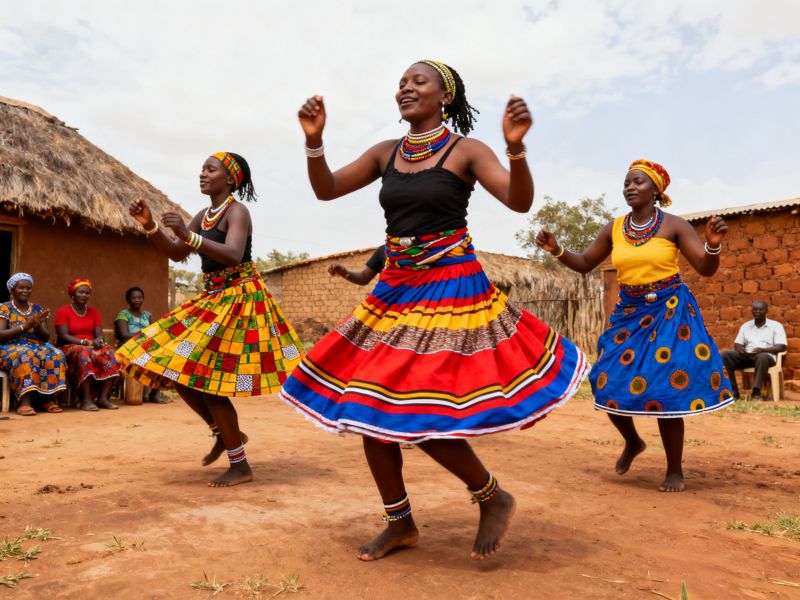
Music and dance carry disproportionate weight in Tsonga cultural life. The xibelani dance。with its rapid hip movements and layered skirts, has become a recognizable symbol at national events—sometimes to the annoyance of elders who feel it's been reduced to a stage gimmick. Contemporary artists like King Monada have fused Xitsonga lyrics with electronic beats, reaching audiences far beyond the language's traditional borders. That kind of crossover matters. Language activists in South Africa point out that Xitsonga remains under-resourced in digital domains;predictive text tools and voice assistants rarely support it well. A 2022 survey by a local language NGO found that fewer than 40 percent of urban Tsonga youth write the language regularly, though most speak it fluently. The gap between spoken vitality and written practice is a quiet concern.Economic pressures push many Tsonga men and women toward migrant labor, historically on the Witwatersrand gold mines and now in construction and hospitality across Gauteng. Remittances hold rural households together, but they also stretch family structures thin. I've seen grandmothers in villages near Thohoyandou raising grandchildren whose parents return maybe twice a year. The Tsonga concept of vukhongeri—roughly。
a sense of reciprocal obligation—adapts to these absences rather than breaking. Churches, both mainline and African independent, fill gaps that state services miss, running informal credit schemes and burial societies. These institutions are unglamorous but effective, and they reinforce a social trust that outsiders often overlook.Looking ahead, the Tsonga story is less about preservation than negotiation. Xitsonga broadcasts on community radio stations thrive, and university programs in Limpopo produce a steady trickle of linguistics graduates. Yet the economic logic of urban migration keeps pulling young people toward English and Afrikaans in formal workplaces. Whether Xitsonga's tonal subtlety and oral wit survive the next few decades depends on choices made in classrooms。recording studios, and living rooms—not on heritage declarations. That's an unromantic reality, but Tsonga communities have navigated worse. The language's future will be decided by everyday use, not by slogans.